Buffalo Wild Wings Scoville Chart with Heat Ranking
The world’s hottest pepper on record packs over two million Scoville Heat Units — enough to make even Buffalo Wild Wings’ boldest sauce look mild by comparison. Every time I’m at the counter, I find myself asking the same question: how much of this can I actually handle?
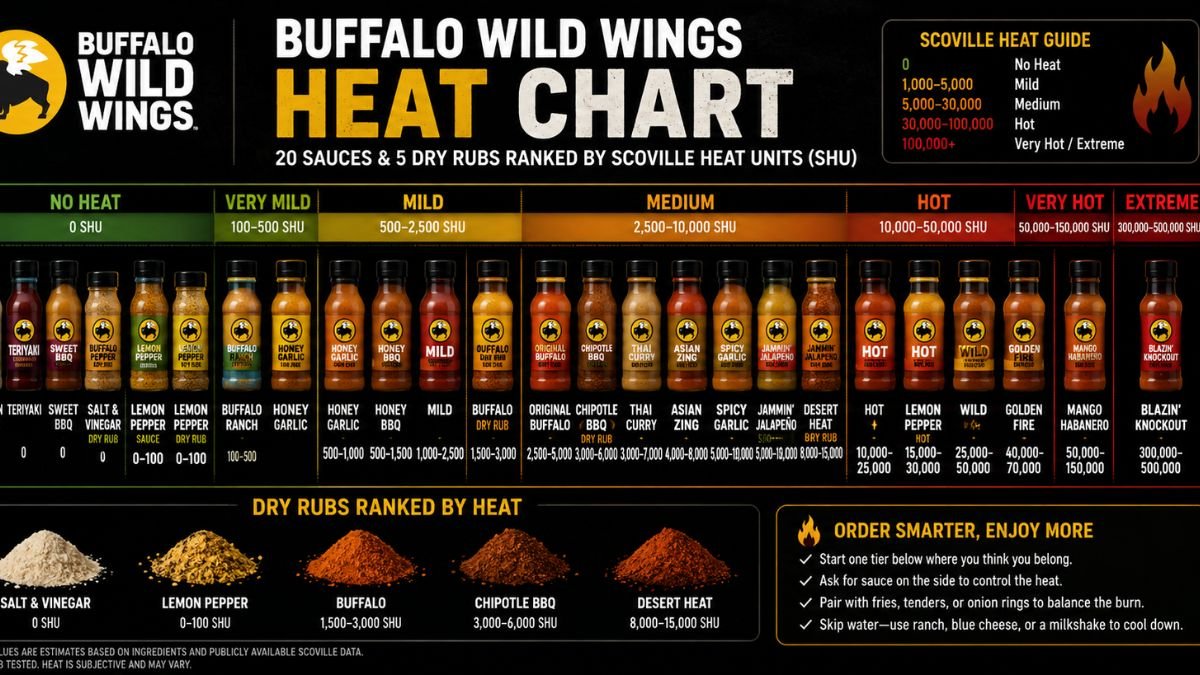
To make that decision easier, I put together this heat chart covering the 20 sauces and 5 dry rubs on the core BWW menu. It’s based on repeated visits, tasting notes, and cross-referencing pepper ingredients — not a lab report, since Buffalo Wild Wings doesn’t publish official Scoville numbers for its recipes.
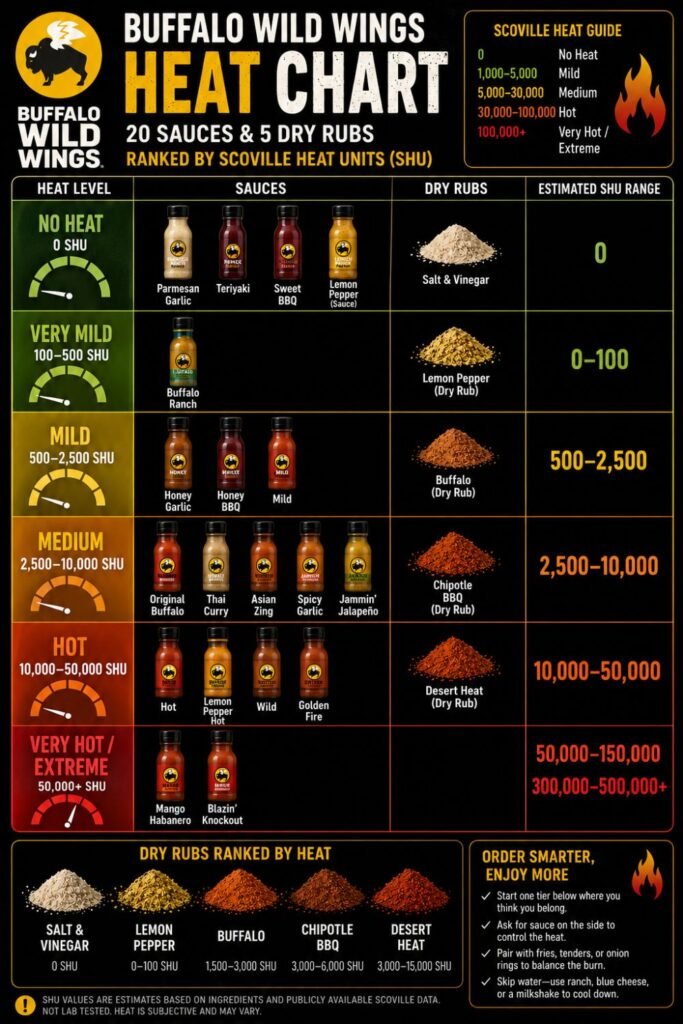
A quick note on the numbers below: every SHU figure in this article is my own estimate, built from the primary pepper used in each sauce and how similar peppers test in publicly available Scoville references. I’ve kept every number consistent across every section of this page — if you see a range for a sauce once, that same range applies everywhere else it’s mentioned.
Why a Buffalo Wild Wings Heat Scale Needs Context
Heat isn’t purely a chemistry question. Two people eating the same wing can walk away with completely different impressions, so a single number rarely tells the whole story.
What I can and can’t confirm
Buffalo Wild Wings does not publish lab-tested SHU figures for its sauces or rubs. Any number you see here — in this article or elsewhere — is an estimate based on the dominant pepper in the recipe and how that pepper typically tests. I’m flagging this clearly rather than presenting estimates as certified fact.
Why flavor, serving size, and tolerance change perceived heat
| Factor | Effect on Perceived Heat | Why |
|---|---|---|
| Serving size | Cumulative | Heat builds across multiple wings |
| Sugar content | Reduces | Sweetness masks capsaicin |
| Acidity | Sharpens | Vinegar makes heat feel more immediate |
| Personal tolerance | Highly variable | Capsaicin receptors desensitize with repeated exposure |
Why I use ranges, not single numbers
Grouping sauces into estimated ranges — rather than a single precise figure — better reflects the reality that batch-to-batch pepper potency varies, and that BWW isn’t disclosing exact figures to work from.
How Scoville Heat Units Work
The Scoville scale measures capsaicin concentration — the compound responsible for the burning sensation peppers produce. It was originally developed to grade chili pepper heat, and it’s since become the standard reference point for rating hot sauces generally.
| SHU Range | Heat Category | What to Expect |
|---|---|---|
| 0 | No heat | Savory or sweet, no pepper burn |
| 1,000–5,000 | Mild | Gentle background warmth |
| 5,000–30,000 | Medium | Noticeable but manageable |
| 30,000–100,000 | Hot | Serious kick, lasting impression |
| 100,000+ | Very hot / extreme | For high-tolerance eaters only |
Fat (butter, oil) dulls perceived heat. Sugar and honey balance it. Vinegar’s acidity tends to sharpen it. These modifiers are why two sauces with similar pepper content can taste very different in intensity.
Full Heat Ranking Chart (Mildest to Hottest)
| Flavor | Type | Heat Category | Estimated SHU Range |
|---|---|---|---|
| Parmesan Garlic | Sauce | No heat | 0 |
| Teriyaki | Sauce | No heat | 0 |
| Sweet BBQ | Sauce | No heat | 0 |
| Salt & Vinegar | Dry Rub | No heat | 0 |
| Lemon Pepper | Sauce | No heat | 0–100 |
| Lemon Pepper | Dry Rub | Very low | 0–100 |
| Buffalo Ranch | Sauce | Very mild | 100–500 |
| Honey Garlic | Sauce | Mild | 500–1,000 |
| Honey BBQ | Sauce | Mild | 500–1,500 |
| Mild | Sauce | Mild | 1,000–2,500 |
| Buffalo | Dry Rub | Mild-medium | 1,500–3,000 |
| Original Buffalo | Sauce | Medium | 2,500–5,000 |
| Chipotle BBQ | Dry Rub | Medium | 3,000–6,000 |
| Thai Curry | Sauce | Medium | 3,000–7,000 |
| Asian Zing | Sauce | Medium | 4,000–8,000 |
| Spicy Garlic | Sauce | Medium | 5,000–10,000 |
| Jammin’ Jalapeño | Sauce | Medium | 5,000–10,000 |
| Desert Heat | Dry Rub | Medium-hot | 8,000–15,000 |
| Hot | Sauce | Hot | 10,000–25,000 |
| Lemon Pepper Hot | Sauce | Hot | 15,000–30,000 |
| Wild | Sauce | Hot | 25,000–50,000 |
| Golden Fire | Sauce | Very hot | 40,000–70,000 |
| Mango Habanero | Sauce | Very hot | 50,000–150,000 |
| Blazin’ Knockout | Sauce | Extreme | 300,000–500,000 |
These are estimated ranges, not laboratory-verified figures. Treat close-together items as roughly comparable rather than strictly ranked.
Zero-to-Low Heat Sauces
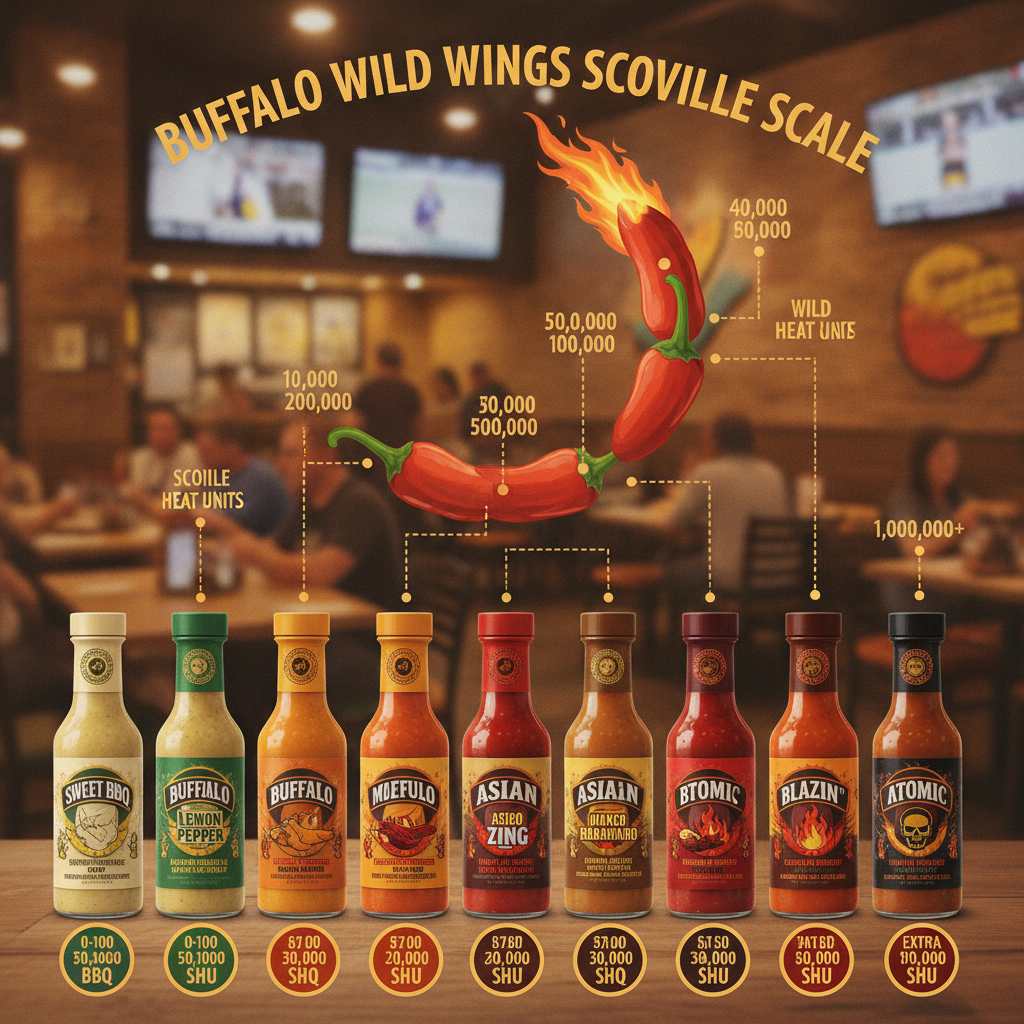
Parmesan Garlic — Creamy, roasted-garlic-forward, and completely heat-free. A safe pick for anyone avoiding spice entirely.
Teriyaki — Sweet, salty, sticky. Asian-inspired and very approachable.
Sweet BBQ — Molasses and brown sugar dominate; sugar content keeps any pepper presence essentially undetectable.
Lemon Pepper (sauce and rub) — Bright and citrusy rather than spicy; the “heat” here is closer to a peppery zing than capsaicin burn.
Mild Sauces
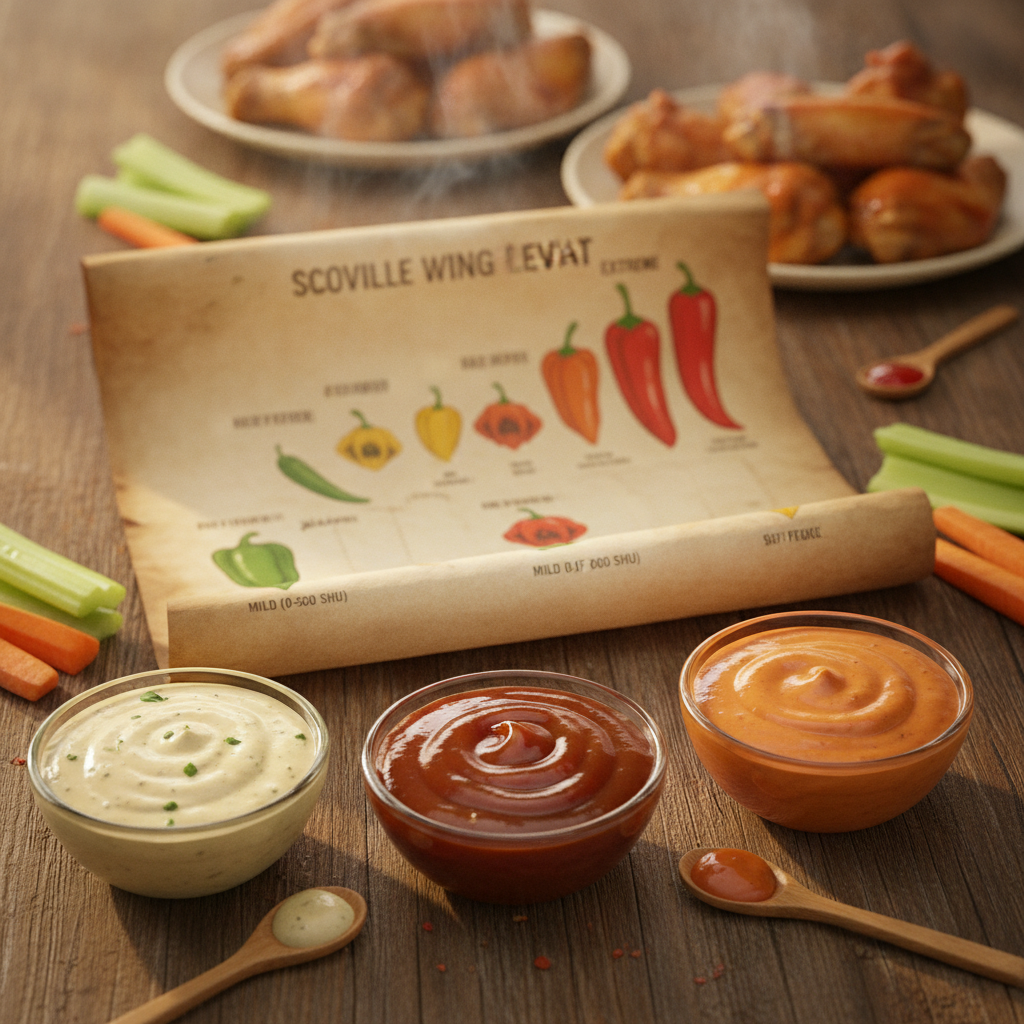
| Sauce | Flavor Profile | Heat Level |
|---|---|---|
| Buffalo Ranch | Creamy, tangy | Very low |
| Honey Garlic | Sweet, savory | Low |
| Honey BBQ | Smoky, sweet | Low |
| Mild | Vinegar-forward | Mild |
These sit at the entry point for anyone wanting the classic buffalo tang without much burn.
Medium Sauces
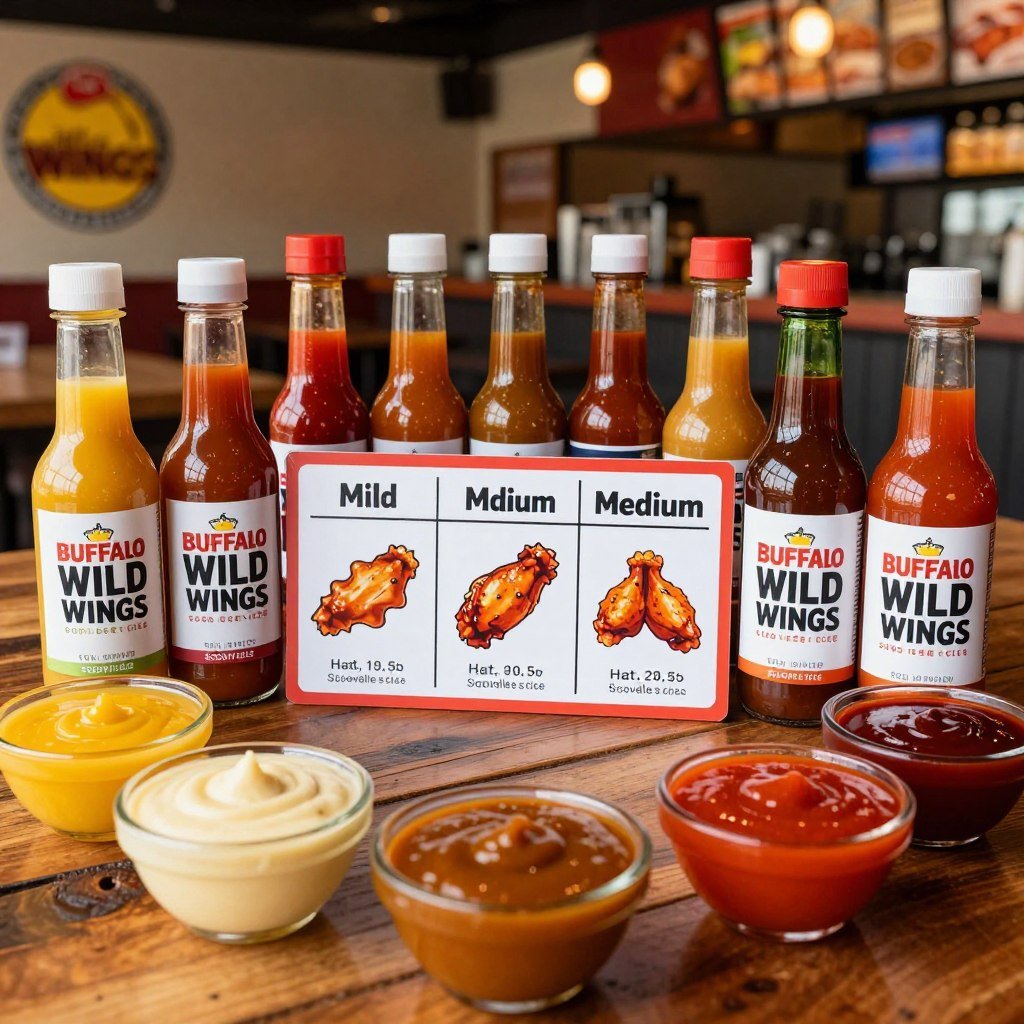
| Sauce | Flavor Profile | Heat Perception |
|---|---|---|
| Original Buffalo | Vinegar & pepper | Moderate |
| Thai Curry | Coconut & curry spice | Aromatic, spicy |
| Asian Zing | Sweet & chile | Sweet-heat |
| Spicy Garlic | Garlic & savory | Bold |
| Jammin’ Jalapeño | Sweet & jalapeño | Zesty |
This tier is where pepper heat becomes a genuine part of the flavor rather than a background note.
Hot Sauces
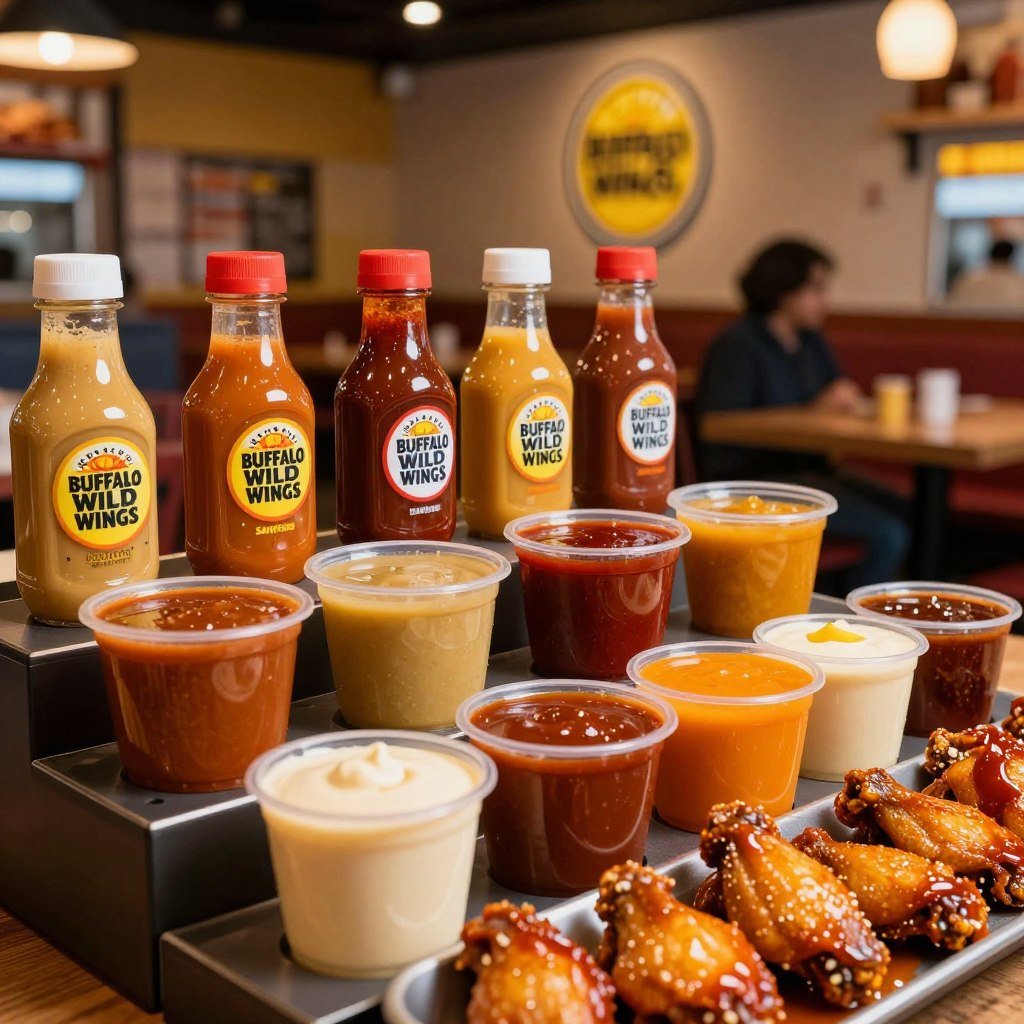
- Hot — Tangy and creamy, heat builds noticeably by the last few wings.
- Lemon Pepper Hot — Citrus brightness paired with real spice.
- Wild — Slower building than “Hot,” which can make it feel more intense by the end of an order.
- Golden Fire — Smoky, savory, with heat that lingers after eating.
Very Hot and Extreme Sauces
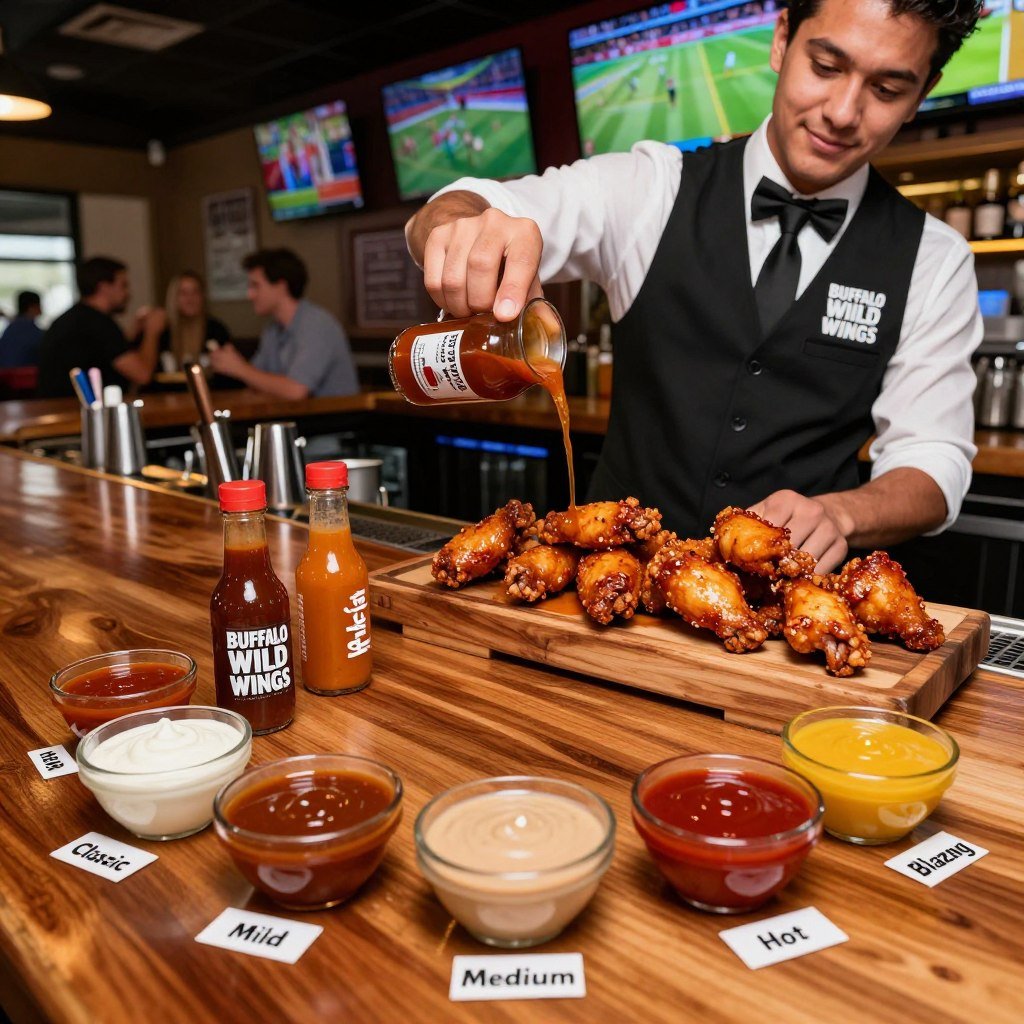
Mango Habanero — Tropical sweetness up front, followed by a slow-building habanero burn. Estimated at 50,000–150,000 SHU.
Blazin’ Knockout — The hottest sauce on the standard menu, built around a multi-pepper blend rather than fruit or sweetness to soften the impact. Estimated at 300,000–500,000 SHU. I don’t have a verified list of the specific peppers BWW uses in this blend, so I’m not going to guess at named peppers — treat any source that claims to know the exact pepper blend with some skepticism, since BWW hasn’t published that information.
Dry Rubs Ranked by Heat
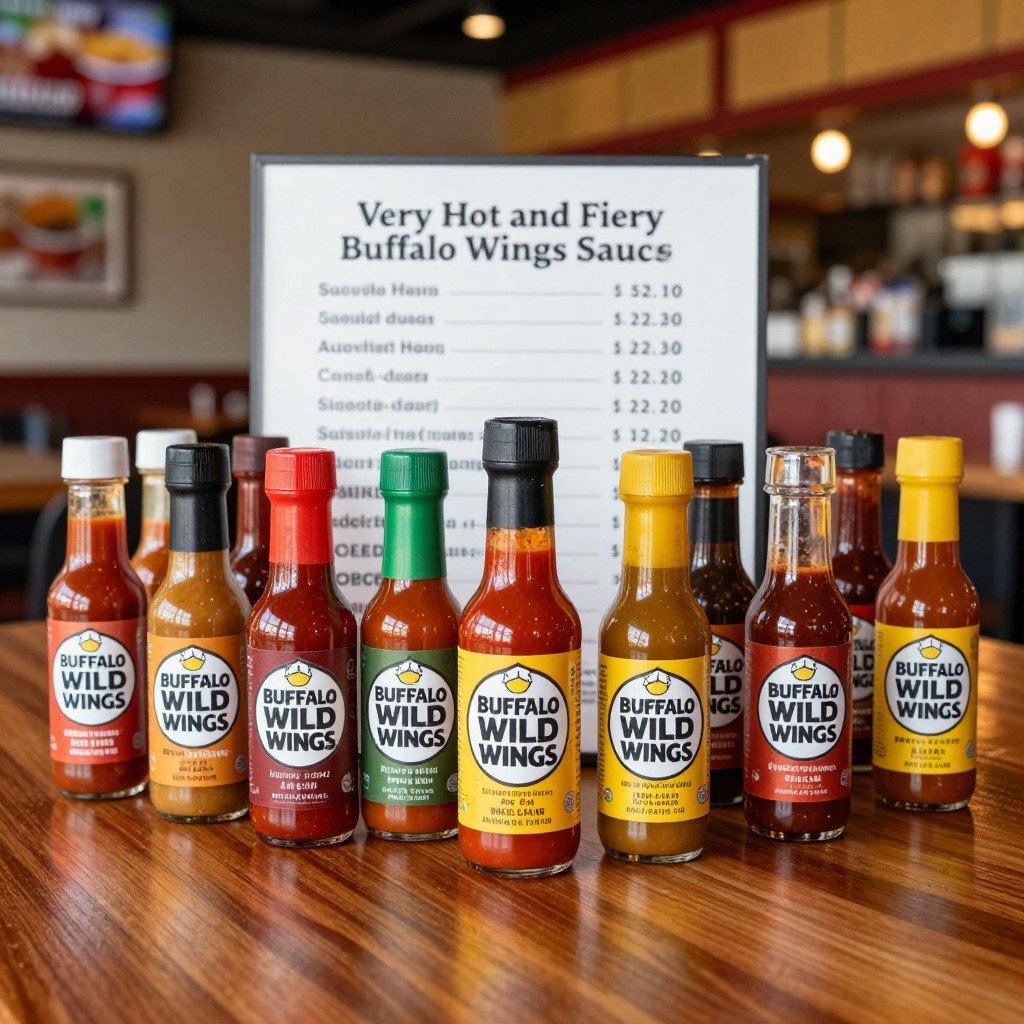
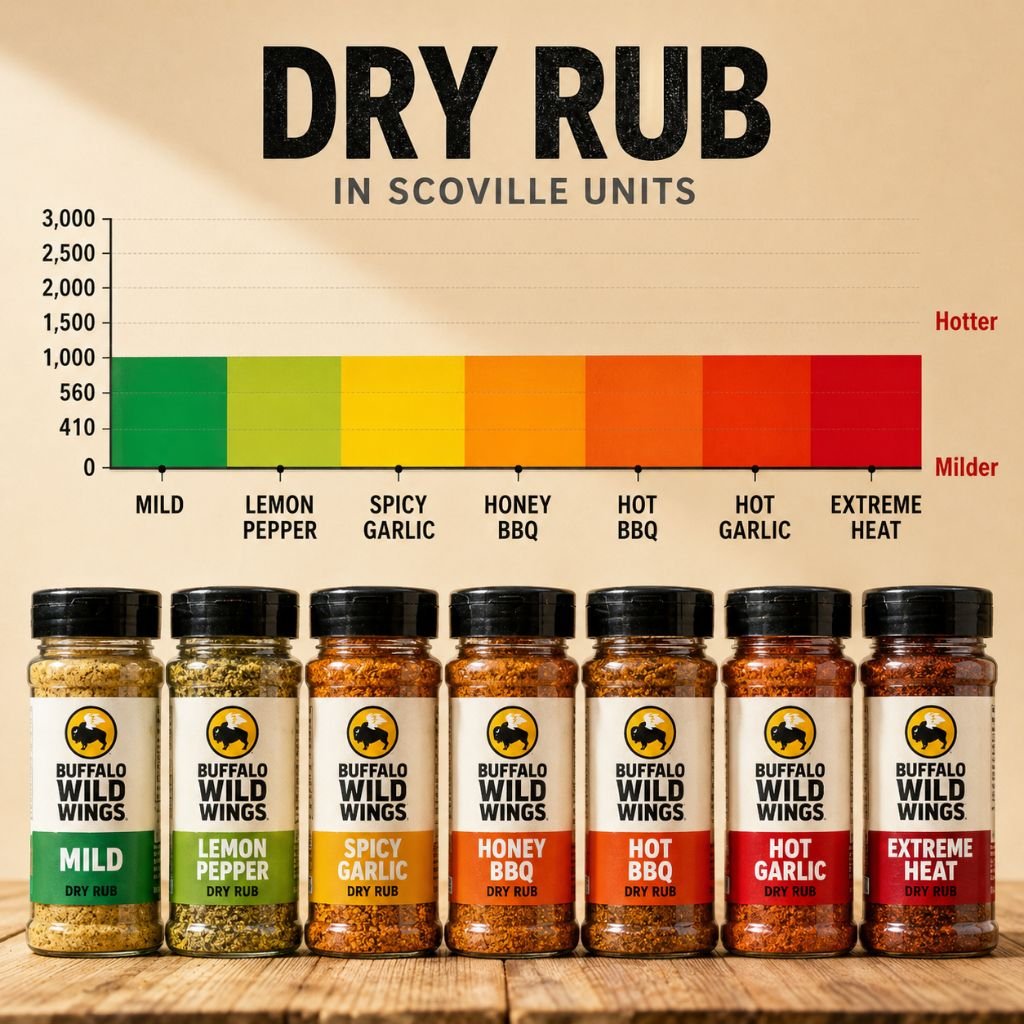
| Dry Rub | Heat Level | Primary Sensation |
|---|---|---|
| Salt & Vinegar | None | Tangy/acidic |
| Lemon Pepper | Very low | Citrus/zesty |
| Buffalo | Mild-medium | Savory/classic |
| Chipotle BBQ | Medium | Smoky/warm |
| Desert Heat | Medium-hot | Spicy/sharp |
Why dry rub heat feels different: without the fat and sugar found in liquid sauces, capsaicin hits the tongue more directly. A rub can feel sharper in the moment even with less total pepper content than a comparable sauce.
How to Order Based on Your Heat Tolerance
New to spice or spice-averse: Parmesan Garlic, Teriyaki, Sweet BBQ, or Lemon Pepper.
Want a noticeable but manageable kick: Original Buffalo, Asian Zing, Spicy Garlic, or Jammin’ Jalapeño.
Chasing serious heat: Hot, Wild, Mango Habanero, or Blazin’ Knockout — approach in that order rather than jumping straight to the top.
Practical ordering tips
- Start one tier below where you think you belong. It’s easier to add heat than to walk it back mid-meal.
- Ask for sauce on the side if you want to control exactly how much goes on each wing.
- Pair hot sauces with fries, tenders, or onion rings to break up the intensity between bites.
- Skip water when the heat hits. Capsaicin is fat-soluble, not water-soluble, so water just spreads it around. Ranch, blue cheese, or a milkshake will do more to cut the burn.
A Note on Menu Availability
This chart covers 20 permanent sauces and 5 dry rubs available at most locations. Buffalo Wild Wings does periodically run limited-time or region-specific flavors that aren’t reflected here.
If you’re chasing a specific seasonal item, check your local restaurant’s app or ask your server — availability varies by location and time of year.
FAQs
Is there an official Scoville rating for Blazin’ Knockout?
No. Buffalo Wild Wings has not published a certified SHU figure for this or any other sauce. Based on its position as the hottest standard-menu item and comparable multi-pepper blends in the industry, I estimate it in the 300,000–500,000 SHU range.
Where does Mango Habanero fall on the heat scale?
I estimate 50,000–150,000 SHU, in the “very hot” category. It’s known for pairing tropical sweetness with a delayed but significant habanero burn.
Are the dry rubs also ranked by heat?
Yes — from Salt & Vinegar (no heat) up to Desert Heat, the spiciest rub on the standard menu. Rubs tend to feel more immediate than sauces since they lack the fat and sugar that soften capsaicin’s impact.
What’s the difference between flavor intensity and heat intensity?
Flavor intensity is about complexity — garlic, honey, smoke, citrus. Heat intensity is specifically about capsaicin burn. A sauce like Thai Curry can taste bold and complex while sitting at a moderate heat level.
Is Wild hotter than Hot?
Yes, slightly — and it builds more slowly, which can make it feel more intense by the end of a full order rather than the first bite.
What’s a good starting sauce for a first-timer?
Mild or Buffalo Ranch. Both carry the classic buffalo flavor with minimal heat, so you can gauge your tolerance before going further up the list.
Does this chart include seasonal or limited-time flavors?
No — it covers the 20 standing sauces and 5 dry rubs found at most locations. Seasonal items rotate regionally, so check your local menu for anything beyond this list.